Calligraphy Alphabet Guide + Free Practice Sheets. Learn the calligraphy alphabet step by step with printable and Procreate practice sheets for beginners on paper or iPad.
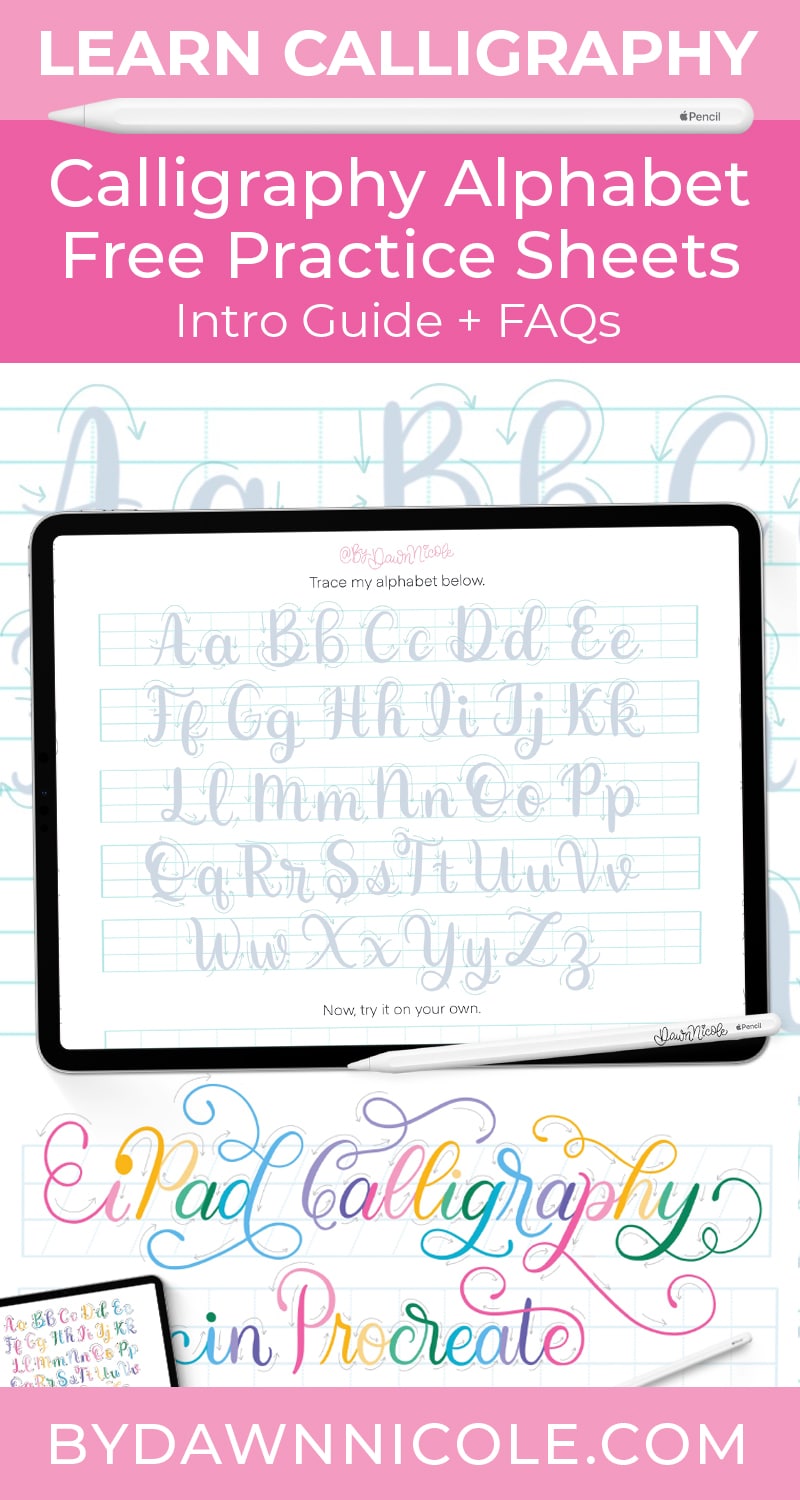
Calligraphy Alphabet Guide + Free Practice Sheets
If you’ve ever looked at a beautiful calligraphy alphabet and thought, “How do people actually learn this?” you’re in the right place.
In this guide, I’m breaking down the calligraphy alphabet step by step and sharing free practice sheets you can use on paper or in Procreate.
Whether you’re brand new to calligraphy or just want smoother, more confident letters, these worksheets and tips will help you practice with purpose instead of guessing your way through each letter.
What Is a Calligraphy Alphabet?
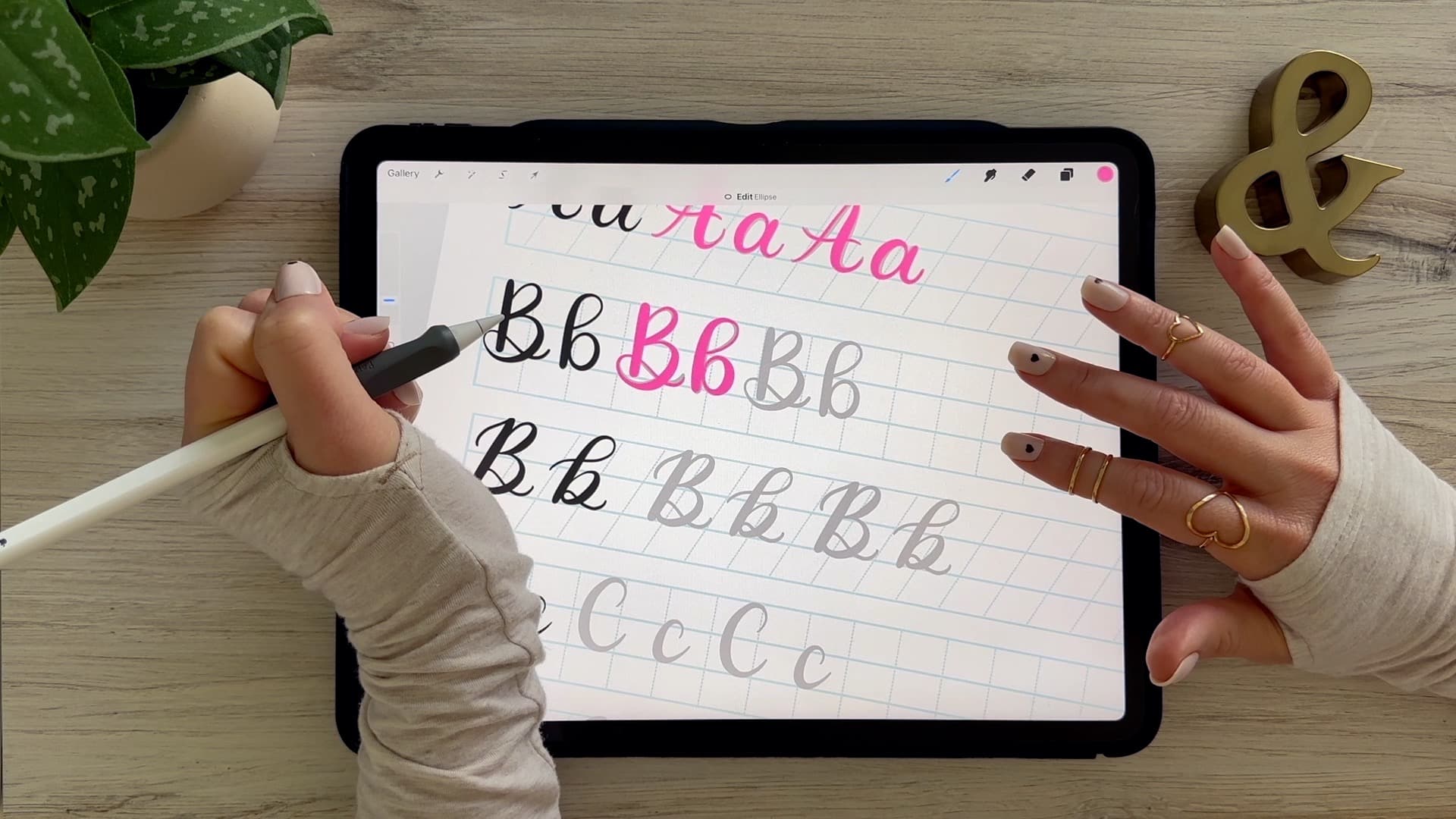
A calligraphy alphabet is a set of letterforms created using pressure to create thick downstrokes and thin upstrokes to give letters their signature contrast. Unlike everyday handwriting, calligraphy focuses on intentional strokes, spacing, and rhythm rather than speed.
Calligraphy Alphabet Styles for Beginners
- Modern Calligraphy Alphabet: A modern calligraphy alphabet uses thick and thin strokes, relaxed rules, playful shapes, and ample room for personal style.
- Traditional Calligraphy Alphabet: A traditional calligraphy alphabet follows historical scripts with precise stroke patterns, consistent slant, and structured letterforms. Examples include Spencerian and Copperplate styles.
- Brush Calligraphy Alphabet: A brush calligraphy alphabet is created with a brush pen or brush tool, using pressure to form bold downstrokes and light upstrokes.
- Digital Calligraphy Alphabet (in Procreate): A digital calligraphy alphabet in Procreate is drawn using pressure-sensitive brushes on the iPad, allowing you to practice, trace, and refine letters with easy undo and layering tools.
What should I practice first when learning the calligraphy alphabet?
Start with basic strokes before moving on to full letters. Once the strokes feel natural, practicing lowercase letters first usually makes learning the full alphabet easier.
Basic Strokes
Check out my blog post all about upstrokes vs downstrokes. pressure contrast, and the basic stroke names and drills. I recommend mastering these before moving on to the alphabet.
Calligraphy Drills Video + Practice Sheets
How to Download & OPEN Files
If you’re using a computer:
- Download the ZIP file.
- Double-click the ZIP file to unzip it. This creates a standard folder containing the files.
- Open the folder, then locate the .procreate file and/or the PDF.
- Send to your iPad using AirDrop, iCloud Drive, Dropbox, or email.
- On your iPad, tap the file and select “Open in Procreate” to open the Procreate file, or open the PDF in your preferred app.
If you’re doing it directly on your iPad:
- Download the ZIP file and open the Files app.
- Go to your Downloads folder or the location you saved it.
- Tap the ZIP file once. The iPad will automatically unzip it into a new folder.
- Open the new folder and tap the .procreate file.
- Tap Share → Open in Procreate (or it may open automatically).
Calligraphy Alphabet Reference GUIDES
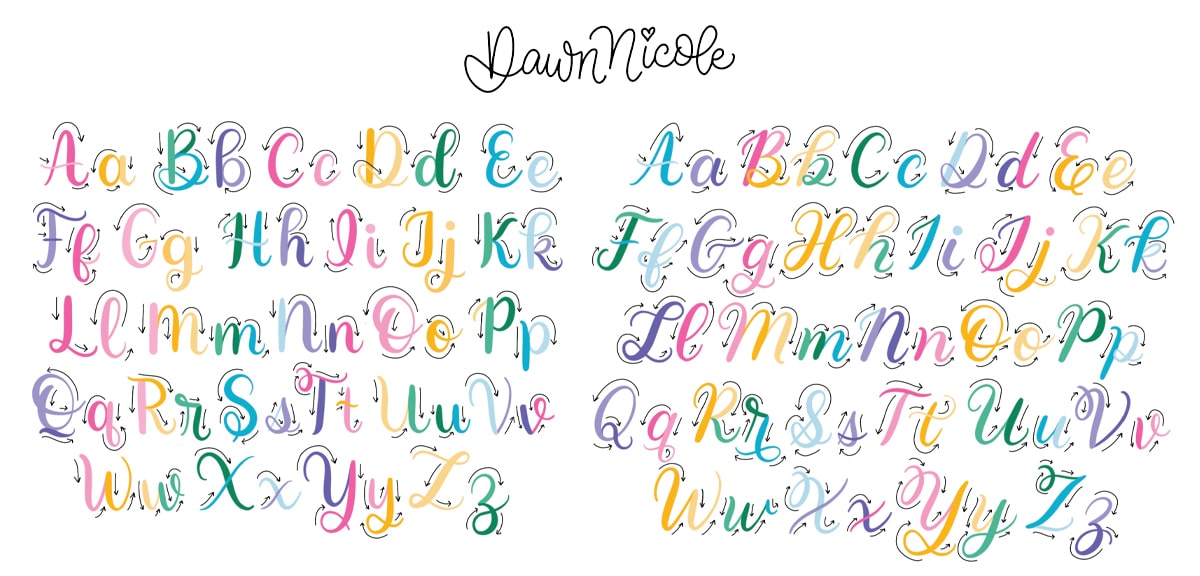
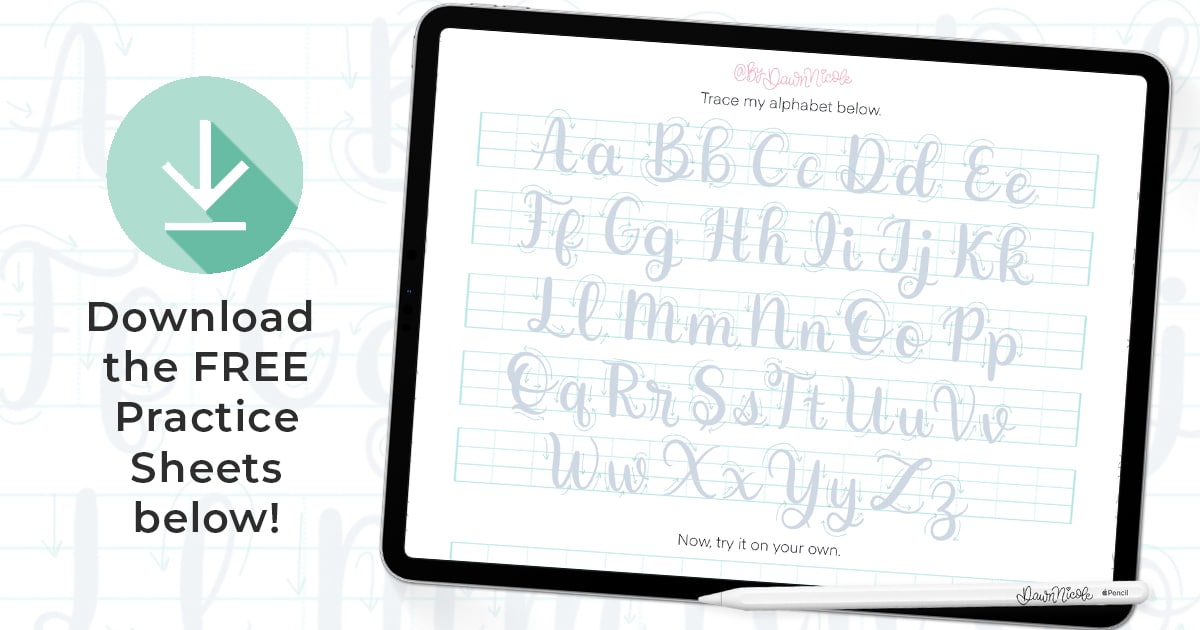
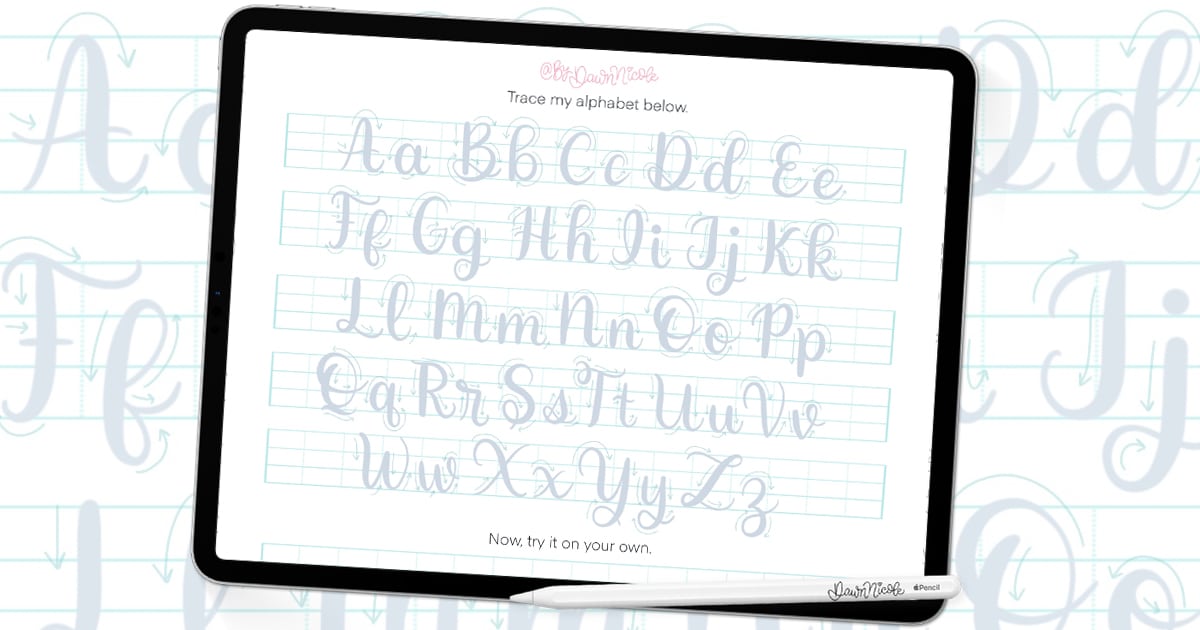
Below is an exemplar guide with directional arrows for upstrokes and downstrokes.
Free Calligraphy Alphabet Practice Sheets
Why practice sheets matter: Practice sheets remove guesswork and help you focus on stroke control, spacing, and letter formation. They speed up learning and reduce frustration, especially when you are just starting out.
The download includes a Printable PDF & a Procreate file.
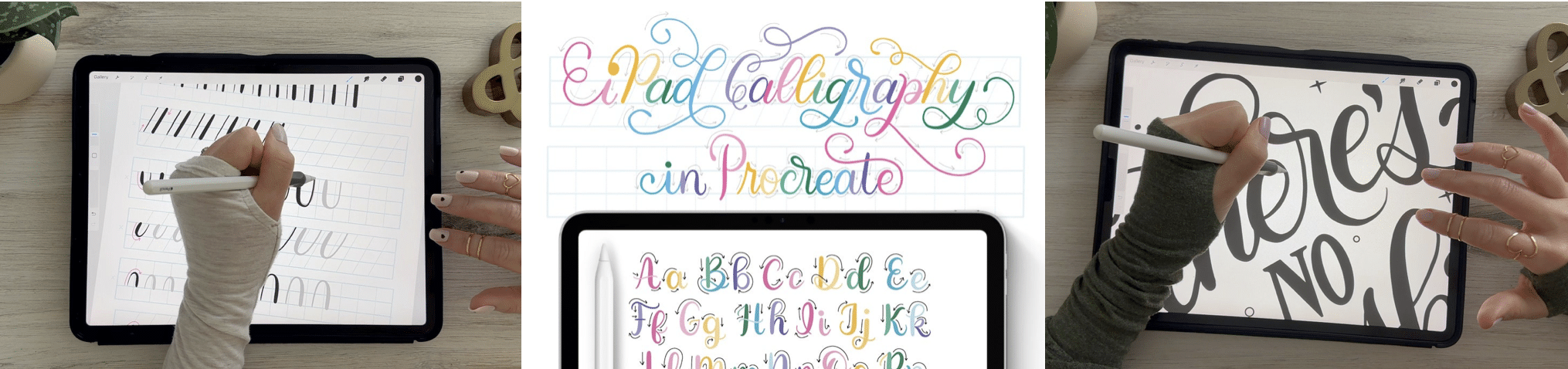
Want Step-by-Step iPad Calligraphy Lessons?
If you want guided, start-to-finish instruction for learning calligraphy on your iPad, I teach the full process inside my iPad Calligraphy in Procreate class. You’ll learn strokes, letterforms, words, and finished pieces with real-time demos and practice projects.
There are 50 Lessons and 3 Hours of Video Content. It’s well-organized and easy to follow via my online class platform (Thinkific). All the brushes and worksheets you need to learn iPad Calligraphy are included with the class.
- Intro Lessons (3 lessons + Class Downloads)
- Drills (1 lesson + Worksheet Set)
- Alphabet (26 lessons + Procreate Workbook)
- Words + Short Phrases (1 lesson + Worksheet Set)
- Tricky Letter Combos (1 lesson + Procreate workbook)
- Project No. 1: Calligraphy Word Art (6 Lessons)
- Project No. 2: Dancing Calligraphy Animation (2 Lessons)
- Project No. 3: Ghostwriting Animation (2 Lessons)
- Bonus Lessons (2 Lessons + Procreate Worksheet)
iPad Calligraphy in Procreate Class →
IPAD CALLIGRAPHY CLASS FAQs
- What Do I Need for this Class? You’ll need an iPad, Apple Pencil, and the Procreate App. Everything else you’ll need is included in your class downloads.
- Can I watch it anytime? Yes! The class is pre-recorded and available to watch at your convenience. You have lifetime access.
- Is it okay if I’m new to Procreate and/or Calligraphy? Yes, you are the intended audience for this class. We’ll take things step-by-step. I love project-based learning because it makes things more fun and easier to understand.
How to Practice the Calligraphy Alphabet Effectively
- Daily Drills. Short daily drills can build muscle memory faster and are easier to commit to than occasional long practice sessions.
- Slow Practice. Practicing slowly helps you control pressure and stroke direction, keeping your letters clean and consistent.
- Trace, then freehand. Start by tracing letters to learn their structure, then move to freehand writing to build confidence and control.
- Digital vs Paper. Digital practice allows easy undo and layering, while paper practice strengthens hand control and pressure awareness.
Best Tools for Practicing Calligraphy Alphabets
- Paper: HP Premium is smooth enough to prevent damage to your brush pens.
- Brush Pens: I recommend the Tombow Fudenosuke brush pens for beginners.
- Procreate brushes: My best-seller is my classic Dawn Nicole Brush Set, ideal for iPad Calligraphy.
Calligraphy Alphabet FAQ
- What is the easiest calligraphy alphabet to learn? Modern calligraphy alphabets are usually the easiest for beginners because they are more flexible and less rule-heavy than traditional styles. You do not need perfect letterforms, and you can focus on learning basic strokes before worrying about consistency.
- Can I learn calligraphy on Procreate? Yes. Procreate is a great way to learn calligraphy because you can practice pressure control, undo mistakes, and reuse worksheets as much as you want. Many beginners find digital calligraphy less intimidating than pen-and-paper calligraphy.
- How long does it take to learn calligraphy? That depends on how often you practice, but most beginners start to feel comfortable with the alphabet after a few weeks of consistent practice (and mastering drills before moving on to letter forms). Short, regular sessions are more effective than long, occasional ones.
- Do I need special pens for calligraphy? You do not need expensive tools to start. A brush pen, flexible nib pen, or a pressure-sensitive Procreate brush will all work. What matters most is learning basic stroke control and consistently practicing letter structure.
- Should I trace or freehand when I practice? Tracing is a great way to build muscle memory when you are first learning. Once the strokes feel familiar, switching to freehand practice helps you develop your own rhythm and style.
- Can I mix paper and digital practice? Absolutely. Practicing on paper improves hand control, while digital practice enables easy repetition and experimentation. Using both can actually help you learn faster.
- Are practice sheets really necessary for learning calligraphy? Yes. Practice sheets remove guesswork and help you focus on stroke control, spacing, and letter formation. They speed up learning and reduce frustration, especially when you are just starting out.
This year is all about sharing TONS of free Procreate video tutorials!
Subscribe to my YouTube Channel!
Happy practicing!