Learn how to create an easy Lavender drawing in Procreate with 4 beginner-friendly styles: basic, folksy, cutesy, and stained glass.
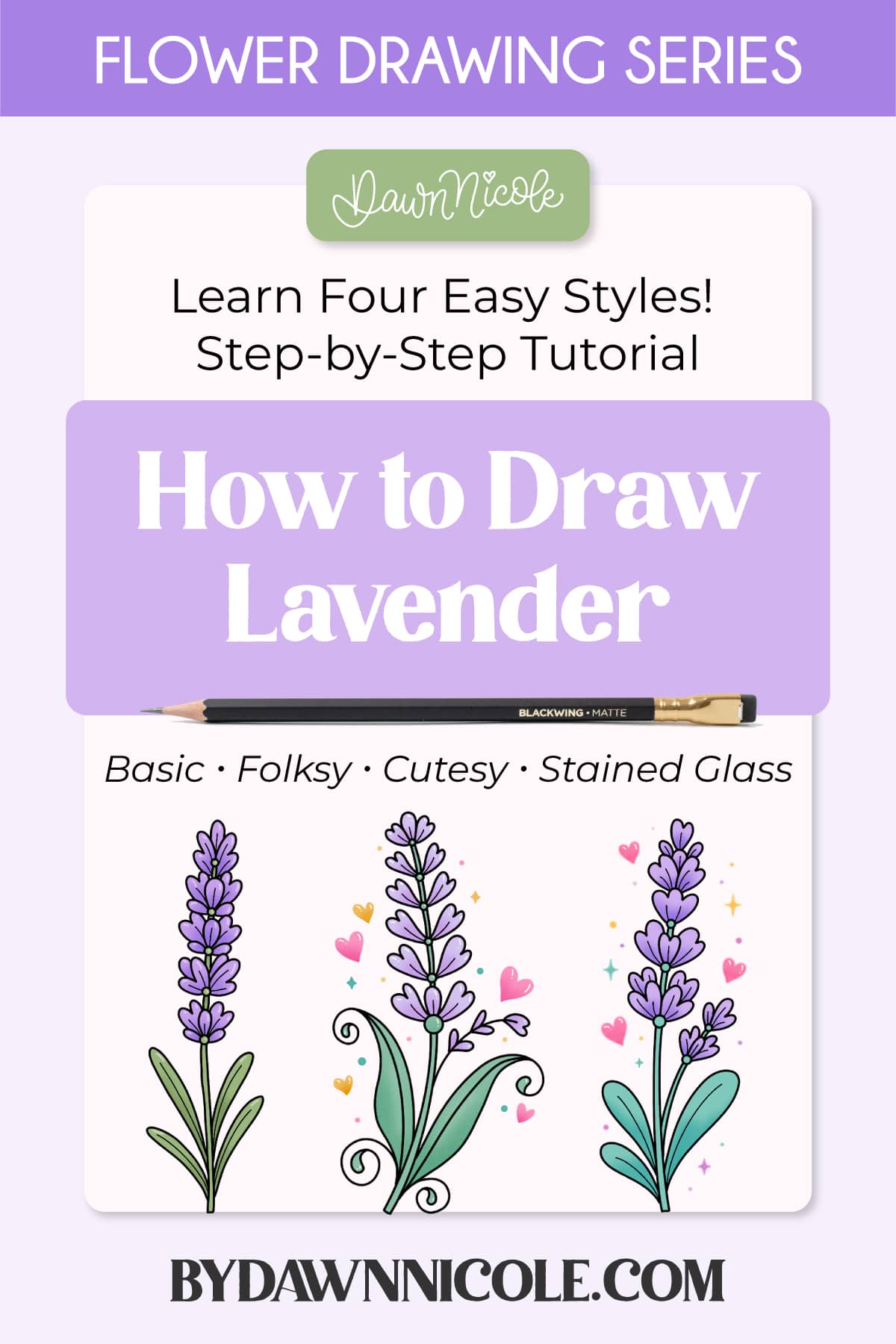
Easy LAVENDER Drawing Tutorial (4 Beginner-Friendly Styles)
Welcome to the eighth flower-drawing tutorial in my series. You’ll learn how to draw lavender with four fun and easy step-by-step drawing tutorials!
Lavender’s elegant stems and tiny blossoms create a beautiful look, but they’re easy to draw once you learn the basic shape.
In this tutorial, I’ll show you how to create Basic Lavender, Cutesy Lavender, Folksy Lavender, and Stained Glass Lavender. Grab your favorite drawing supplies or open up Procreate, and let’s draw these fragrant springs!
What You’ll Need
Anything you can draw with! While I did these on my iPad in the Procreate App, you can follow along with traditional supplies as well. You can check out my favorite digital and physical art supplies on my Amazon page!
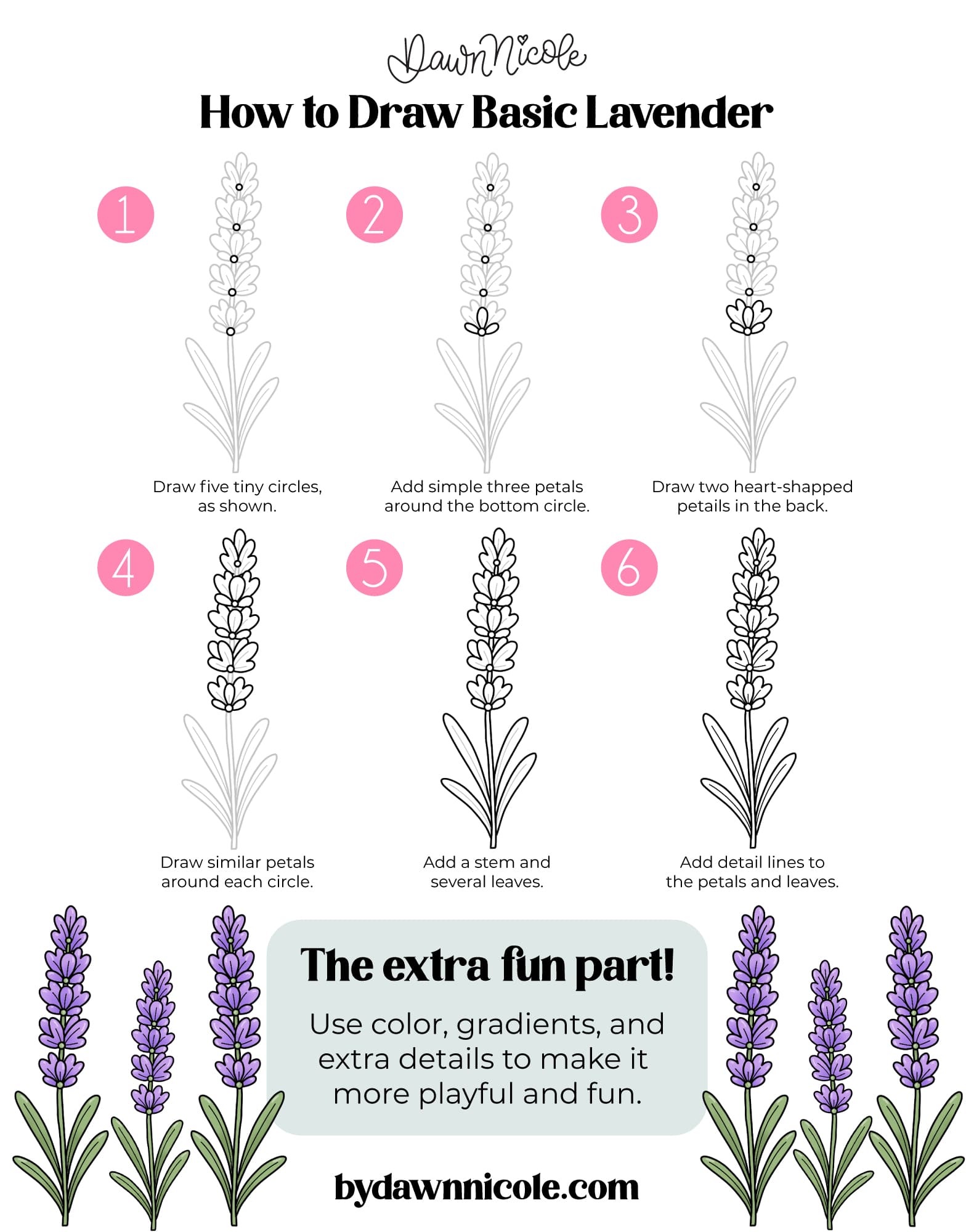
Easy BASIC LAVENDER Drawing
A simple and elegant lavender sprig with clean lines and minimal details.
If this is your favorite style, check out my Enchanted Botanicals Stamp Kit for Procreate.
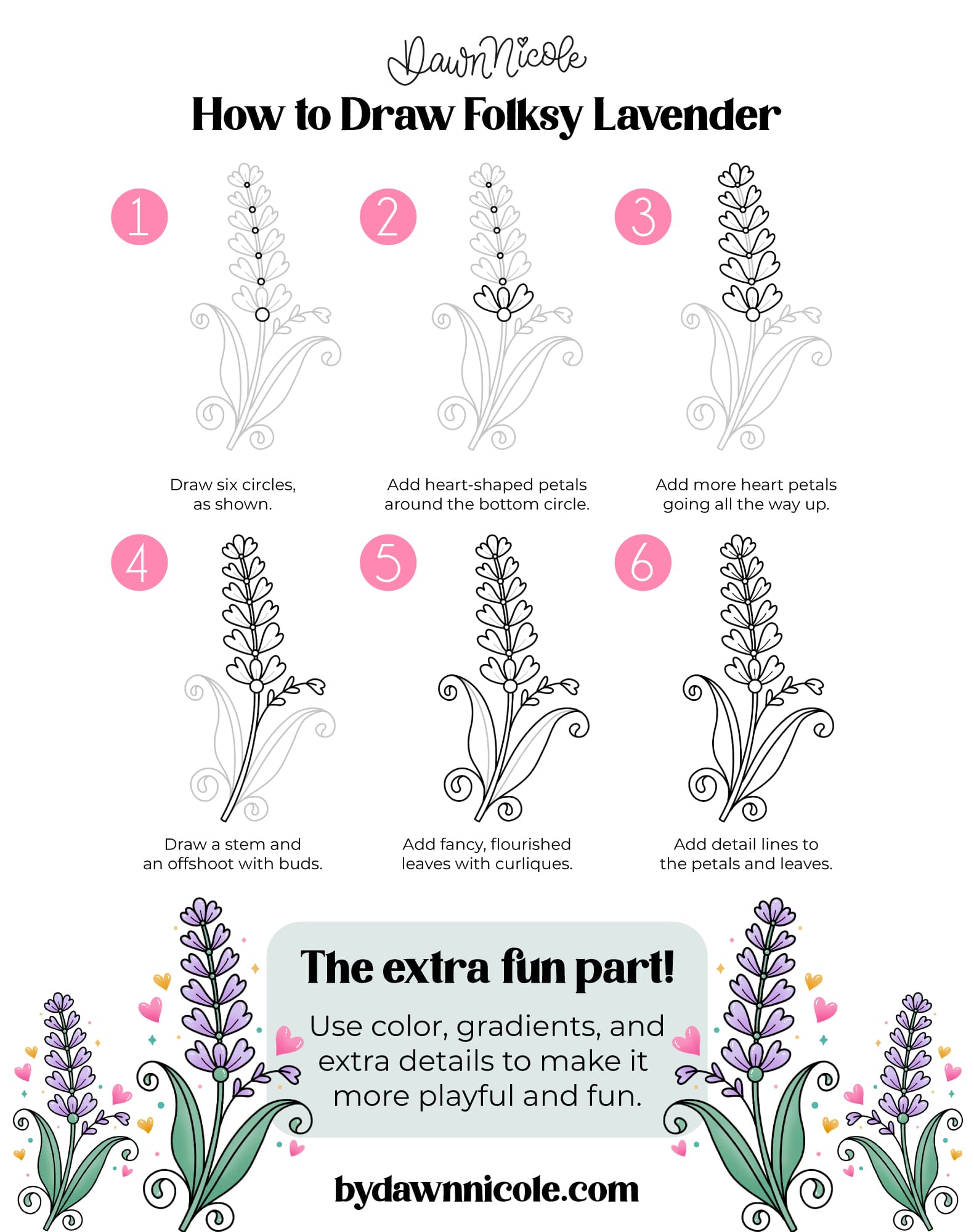
Easy Folksy LAVENDER Drawing
Decorative lavender with folksy details, swirls, and flourished leaves. Folksy florals are one of my favorite ways to create whimsical, beginner-friendly artwork. Don’t be afraid to try non-traditional colors. They add to the whimsy and playfulness!
If you love this style, check out my Modern Folk Art Stamp Kit for Procreate.
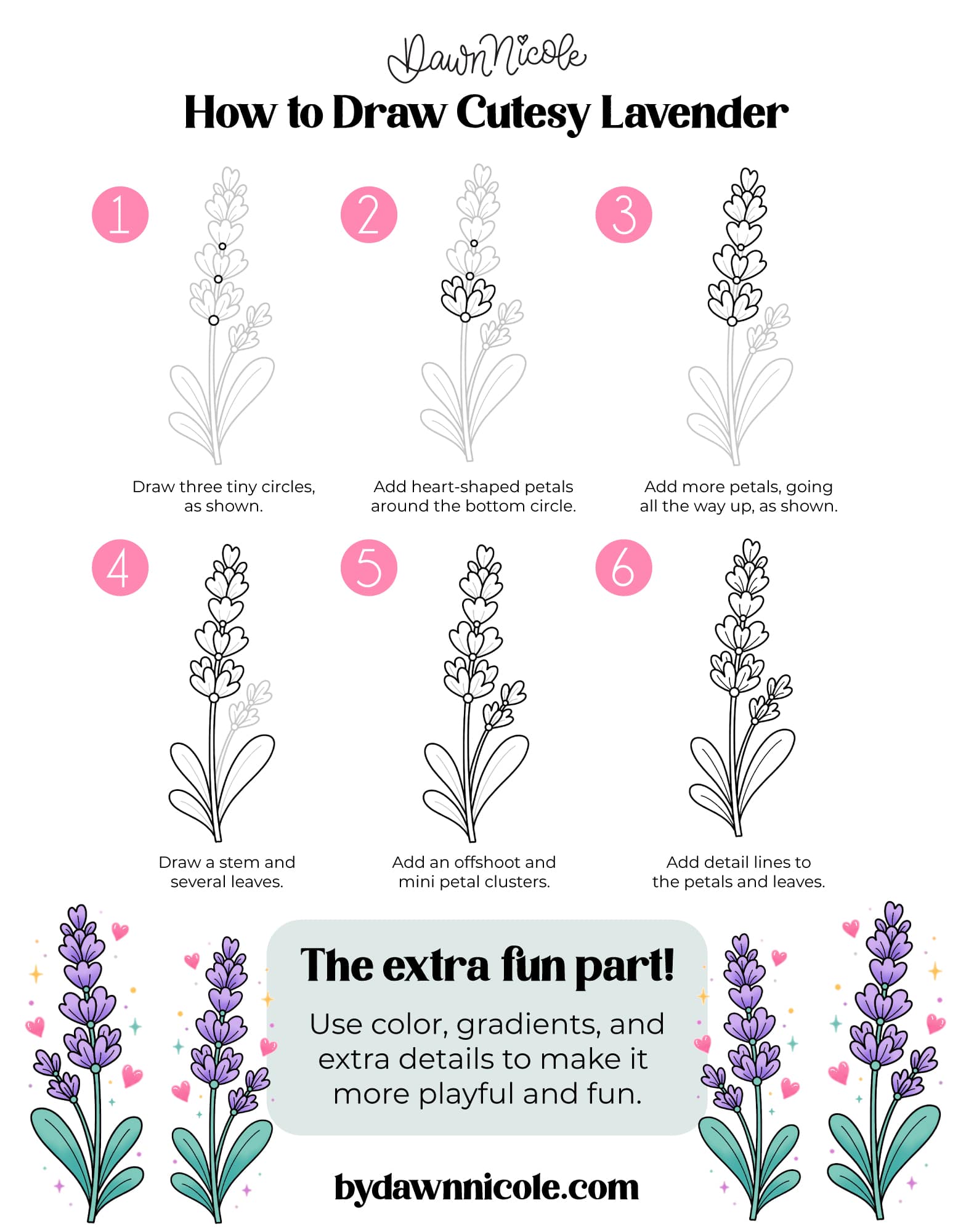
Easy CUTESY LAVENDER Drawing
A sweet and playful lavender sprig with rounded shapes, hearts, and sparkles.
If you love this one, check out my Super Cute Stamp Kit for Procreate.
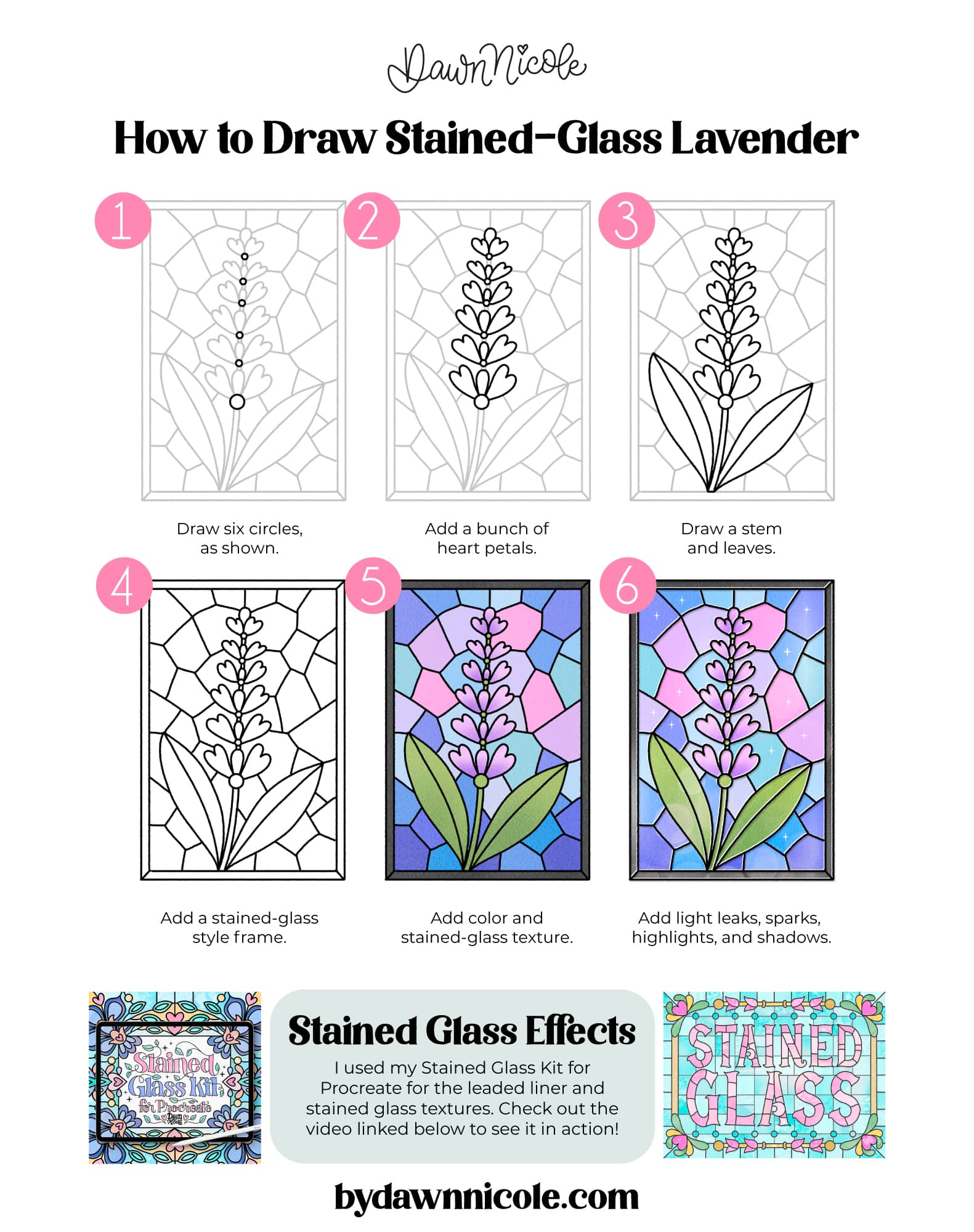
Easy Stained Glass Lavender Drawing
Let’s level up a bit and draw a stained-glass-inspired version. I created this using my Stained Glass Kit for Procreate. Want a video tutorial? Watch a free lesson on how I create Stained Glass Art in Procreate.
Stained Glass Video Tutorial
Tips for Drawing Lavender
Lavender is one of the easiest flowers to draw because it’s made up of lots of tiny blooms arranged along a single stem. By focusing on the overall shape first, you can quickly create beautiful lavender sprigs in both realistic and whimsical styles.
Here are a few tips for drawing lovely lavender:
- Start with the stem. Draw a long, slightly curved stem to give your lavender a natural, graceful appearance.
- Build the flower spike gradually. Begin with just a few small flowers at the tip, then add more as you move downward to create the characteristic tapered shape.
- Use simple flower shapes. Tiny ovals, teardrops, or little “U” shapes work perfectly for individual lavender blossoms. You don’t need to draw every flower in detail.
- Vary the placement. Stagger the blossoms around the stem instead of lining them up in perfect rows. This makes the lavender look fuller and more realistic.
- Add slender leaves. Lavender leaves are long, narrow, and slightly pointed. A few leaves near the base of the stem are all you need.
- Draw several stems together. Lavender is especially beautiful in small bunches. Vary the height and direction of each stem to create a natural bouquet.
- Experiment with color. Lavender flowers can be soft lilac, violet, deep purple, pink, white, or blue-violet. Try blending multiple shades for extra depth and dimension.
- Make it whimsical. Add tiny hearts, sparkles, decorative line work, folk-art patterns, or stained-glass sections to transform a simple lavender sprig into your own signature style.
With just a few curved stems and clusters of tiny flowers, you can create elegant lavender illustrations that are perfect for spring, summer, home décor, greeting cards, and botanical doodles.
Easy Lavender Drawing FAQs
How do you draw simple lavender for beginners?
To draw simple lavender, start by sketching a long, slightly curved stem. At the top of the stem, draw a cluster of small oval or teardrop-shaped flowers, beginning with a few at the tip and gradually adding more as you move downward to create the signature lavender spike. Add a few long, narrow leaves near the base of the stem, then finish with simple details or color. Once you’ve mastered the basic shape, try drawing several stems together to create a beautiful lavender bouquet.
What is the easiest flower to draw?
Daisies are often considered one of the easiest flowers to draw because they use simple shapes and don’t require complicated layering. Their straightforward structure makes them perfect for beginners.
Can I draw lavender in Procreate as a beginner?
Absolutely! Procreate is a great tool for beginner flower drawings. You can use layers to sketch, ink, color, and experiment with different styles while easily correcting mistakes along the way.
What brushes work best for drawing lavender in Procreate?
The best brush depends on the style you’re creating. Monoline brushes are great for clean outlines, watercolor brushes create soft painted effects, and textured brushes can add extra personality to your tulip illustrations.
How do I make my drawing look more realistic?
To create a more realistic flower, vary the size and direction of your petals, add subtle shading, and include overlapping petals. Small details in the flower center can also help add depth and dimension.
What colors can lavender be?
Lavender is most commonly known for its soft purple flowers, but different varieties can bloom in shades of lavender, violet, lilac, deep purple, blue-violet, pink, and white. The foliage is often a silvery green, which creates a beautiful contrast with the colorful flower spikes. For whimsical illustrations, don’t be afraid to experiment with pastel rainbows, ombré gradients, or unexpected color combinations. Lavender’s simple shape looks beautiful in both realistic and imaginative color palettes.
Why do my petals look uneven?
Uneven petals are completely normal and often make your flower look more natural. Real flowers aren’t perfectly symmetrical, so slight variations can actually improve the overall appearance of your drawing.
How can I make my flower drawing more decorative?
Try adding patterned petals, playful doodles, decorative centers, hearts, dots, leaves, or folk art-inspired details. Drawing the same flower in different styles is a fun way to develop your creativity and illustration skills.
What can I do with my finished drawings?
Finished illustrations can be used for greeting cards, stickers, digital planners, social media graphics, wall art, scrapbooking projects, or personal creative practice. They’re also perfect for creating repeating floral patterns.
What flowers should I draw after learning orchids?
Once you’ve mastered these, try drawing other beginner-friendly flowers like roses, daisies, sunflowers, tulips, lilies, cherry blossoms, and orchids. Each flower teaches different techniques while helping you build confidence as an artist. I’ll be sharing tutorials for all of these over the coming months as part of my “Flower Fridays” series.
Learn the art of playful lettering with me
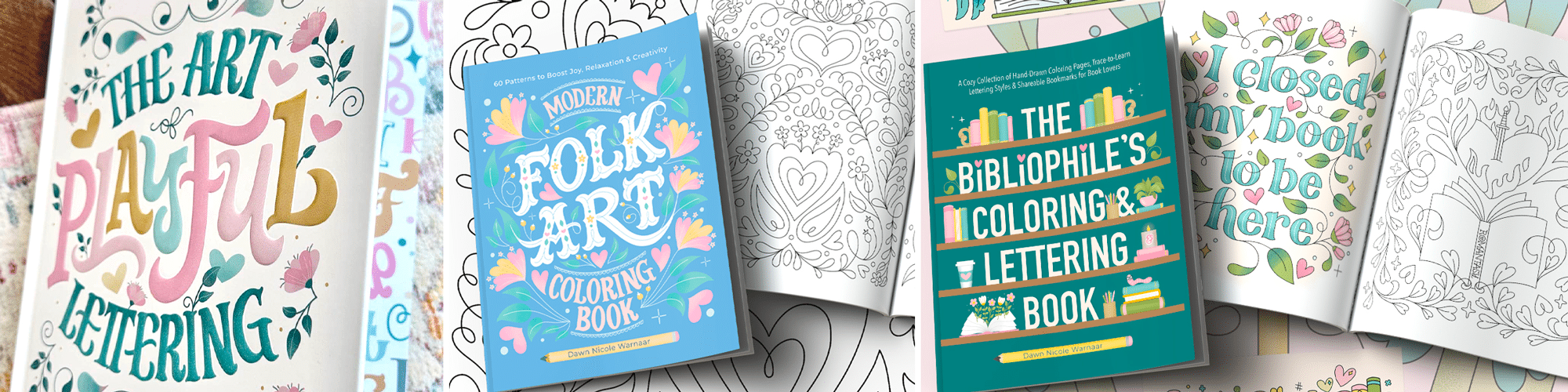
- Grab a copy of my book, The Art of Playful Lettering, on Amazon. Some of the info and artwork in this blog post were created for this book. That section of the book also contains color palettes to inspire your lettering creations!
- Check out the Procreate Brush Sets and Online Classes in my lettering shop.
- Pre-order my Modern Folk Art Coloring Book to relax and color my hand-drawn designs.
- Check out my 2025 Playful Lettering Style Challenge.

From the lettering Shop
Check out my five-star-rated Procreate Brush Sets, Classes, & Lettering Style Workbooks!
I hope you enjoy this Lavender Drawing Guide and Tutorial!
Happy creating!